Managing Maintenance Medications: A Patient's Checklist
On blood pressure meds, diabetes drugs, or thyroid medication long-term? This checklist covers everything from refill timing to dose tracking to annual prescription reviews.
> **Quick Answer:** The most effective maintenance medication system combines 90-day supplies, synchronized fill dates, and a digital calendar with refill reminders set 7 days before your early refill window opens.
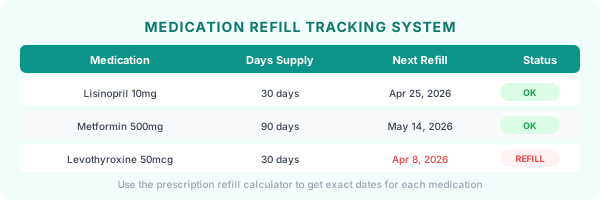
Taking one maintenance medication is manageable. Taking four or five is where things fall apart — not because patients forget to take their pills, but because keeping track of which one needs to be refilled, when, and at which pharmacy is genuinely complex.
This checklist is designed for patients on one or more chronic condition medications. Work through it once, set up the system, and you'll spend less time at the pharmacy and less money on your medications.
What Counts as a Maintenance Medication?
A maintenance medication is any drug taken on an ongoing basis for a chronic condition — one that requires treatment for months or years, not days. Common categories:
**Cardiovascular:** Lisinopril, amlodipine, metoprolol, carvedilol, losartan, atorvastatin, rosuvastatin, warfarin, apixaban, aspirin (prescription-strength)
**Endocrine and metabolic:** Metformin, glipizide, sitagliptin, semaglutide (Ozempic), insulin (multiple types), levothyroxine, methimazole
**Mental health:** Sertraline, escitalopram, fluoxetine, venlafaxine, bupropion, lithium, quetiapine, aripiprazole
**Respiratory:** Fluticasone/salmeterol (Advair), tiotropium (Spiriva), montelukast
**Musculoskeletal:** Alendronate, methotrexate (for rheumatoid arthritis), hydroxychloroquine
**Other:** Tamsulosin, finasteride, topiramate, gabapentin (long-term use)
If you've been on a drug for more than 3 months and expect to continue indefinitely, it's a maintenance medication. Everything on this checklist applies.
The Checklist
Part 1: Optimize Your Supply
**□ Switch to 90-day fills for eligible maintenance medications.**
Most chronic condition medications qualify for 90-day supplies. This cuts your pharmacy trips from 12 to 4 per year, often costs less per day, and dramatically reduces the chance of running out. Ask your prescriber to update the quantity at your next appointment or via a portal message. [See the full cost comparison](/blog/90-day-supply-benefits).
**□ Request synchronized fill dates.**
If you take multiple medications, ask your pharmacist to sync them all to the same fill date. Instead of going to the pharmacy on different days throughout the month, you fill everything on one day every 30 or 90 days. Most pharmacies offer this — just ask at the counter or during a medication review appointment.
**□ Confirm you're using the most cost-effective pharmacy option.**
Compare your current copays against: mail-order through your PBM, a local independent pharmacy, and discount card prices for generics. The cheapest option isn't always your current pharmacy. [Seven cost-saving strategies are outlined here](/blog/medication-cost-savings).
Part 2: Set Up Your Tracking System
**□ List every maintenance medication in one place.**
Write down: medication name and dose, fill date, quantity, doses per day, days supply, next refill date, total refills authorized, and remaining refills. A simple spreadsheet or notes app works fine.
**□ Calculate the early refill date for each.**
Use the [prescription refill calculator](/prescription-refill-calculator) for each medication. Enter the fill date, quantity, and dose schedule — it returns your days supply, next refill date, and the 80% early refill eligible date. Record the early refill date as your target refill date, not the last day of supply.
**□ Add refill reminders to your calendar.**
Set a calendar notification 7 days before each medication's early refill date. This gives you time to call in the refill, wait for mail-order delivery, or schedule a pickup — without cutting it close.
**□ Track remaining refills.**
Note how many refills are authorized and count them down as you fill. When only 1-2 refills remain, contact your prescriber at your next appointment to confirm they'll renew the prescription. Don't wait until refill 0.
Part 3: Know Your Medications
**□ Understand what each medication does and why you're on it.**
This sounds basic, but many patients take pills they couldn't name or explain if asked. Knowing your medications helps you notice side effects, understand why you shouldn't stop abruptly, and catch errors at the pharmacy.
For each medication, you should know: the condition it treats, the dose you take, when to take it relative to food/other meds, and what happens if you miss a dose or stop suddenly.
**□ Know which medications require consistent timing.**
Some drugs have strict timing requirements:
- **Levothyroxine (thyroid):** Take on an empty stomach 30-60 minutes before food. Calcium, iron, and certain antacids interfere with absorption.
- **Warfarin:** Take at the same time daily. Interactions with vitamin K-containing foods matter.
- **Metformin:** Take with food to reduce GI side effects.
- **Bisphosphonates (Fosamax/alendronate):** Take on an empty stomach with a full glass of water, stay upright for 30 minutes.
**□ Identify medications you cannot stop abruptly.**
Stopping these medications suddenly can cause serious rebound effects:
- Beta-blockers (metoprolol, carvedilol): Abrupt discontinuation can trigger rebound hypertension and angina.
- Benzodiazepines (Xanax, Valium): Withdrawal can cause seizures — taper under medical supervision.
- Corticosteroids (prednisone, taken long-term): Adrenal suppression; taper required.
- Antidepressants (most SSRIs/SNRIs): Discontinuation syndrome with abrupt stopping.
If you're running low on any of these, escalate your refill request immediately rather than waiting.
Part 4: Annual Medication Review
**□ Review all maintenance medications with your prescriber at least annually.**
Ask: Is each medication still necessary? Is the current dose optimal? Has anything changed in my health status, weight, or other medications that affects this?
Many patients stay on medications long after the indication has resolved — a blood pressure medication started after a stressful life event may no longer be needed once the stressor is gone and lifestyle changes have taken effect.
**□ Check for drug interactions when starting new medications.**
Every new prescription — even antibiotics and antifungals — has the potential to interact with existing maintenance medications. Your pharmacist is the best first resource for interaction checks. Many common combinations cause problems: warfarin and antibiotics, statins and certain antifungals, SSRIs and NSAIDs.
**□ Confirm all medications are still covered by your insurance.**
Formularies change annually, usually on January 1st. A drug in Tier 2 this year may move to Tier 3 or require prior authorization next year. Review your plan's formulary each fall during open enrollment season. If a medication shifts tiers, your prescriber can sometimes request a formulary exception.
When Something Changes
Dose changes are the most disruptive event in maintenance medication management. A dose increase means your current supply runs out sooner than expected. A dose decrease means you might have unused medication when refill time comes.
When your dose changes, recalculate your days supply immediately using the [refill date estimator](/prescription-refill-calculator). Enter the new dose, your current quantity on hand, and today's date to get a revised refill date. Update your calendar reminders accordingly.
Our [guide to tracking multiple prescriptions at once](/blog/multiple-medication-tracking) builds on this checklist with a system for households where more than one person is managing prescriptions.