Never run out of your prescription again.
Enter your fill date and tablet count. Get your exact refill date, early-fill eligibility window, and days of supply remaining. Built on FDA & NABP pharmacy standards used by your pharmacist.
Tell us about your prescription
Check the label on your pill bottle. Takes 10 seconds.
The date on your prescription label (defaults to today)
Built the same way your pharmacist does the math
We don't estimate. Every result uses the exact formula licensed pharmacists apply under the National Association of Boards of Pharmacy (NABP) and CMS Medicare Part D rules.
Pharmacist-reviewed logic
Formula vetted against NABP Model Pharmacy Act standards and CMS dispensing rules.
Exact refill date
Know your refill date and the 80% early-fill window so you can avoid gaps or denials.
Private by design
Everything runs in your browser. No account, no storage of your prescription data.
Annual cost preview
Optional copay input estimates your yearly out-of-pocket cost from fills-per-year.
How the calculator works
Grab your pill bottle, we pull exactly what we need from the label. The math is done the moment you finish Step 3.
Enter your prescription
Type your fill date and the tablet count shown on your label. Smart presets cover the common 30 / 60 / 90 / 180-day supplies.
Tell us how you take it
Pick once-daily, twice-daily, or another frequency. We factor in tablets per dose and show your days-supply live as you type.
Get your refill date
See your exact refill date, the 80% early-fill window, days remaining, and a color-coded status so you know if you need to act today.
What a refill calculator actually does
A refill calculator tells you exactly when your supply ends and when your pharmacy can dispense a new fill under the 80% rule. Here's the plain-English version.
Any prescription. Any pharmacy. Any schedule.
Chronic condition patients
Blood pressure, thyroid, diabetes, mental health; any daily medication where a gap is not an option.
Caregivers
Track refill windows for a parent, child, or spouse. Every prescription calculated independently.
Mail-order patients
See the exact reorder date for 90-day supplies, so the next shipment lands before you run out.
Anyone denied "too soon"
Verify the days-supply your insurance has on file and fix the mismatch in one call.
Used by patients, caregivers, and pharmacy teams
“I was constantly getting 'too soon to refill' denials at the counter. This told me my insurance window opens April 25, and it worked on the dot.”
“90-day mail-order kept sneaking up on me. Now I know the exact day to reorder. No more rush-shipping levothyroxine.”
“Finally a calculator that uses the actual NABP formula. I send my patients here instead of doing math on the receipt paper.”
Refill guides worth reading
Plain-language answers to the questions pharmacists hear every day.
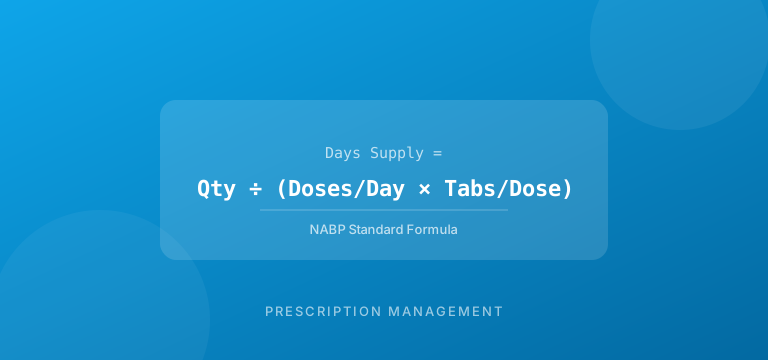
How Pharmacy Days Supply Is Calculated
The exact NABP formula your pharmacist uses: with worked examples so you can verify your own supply before a refill is denied.
Read guide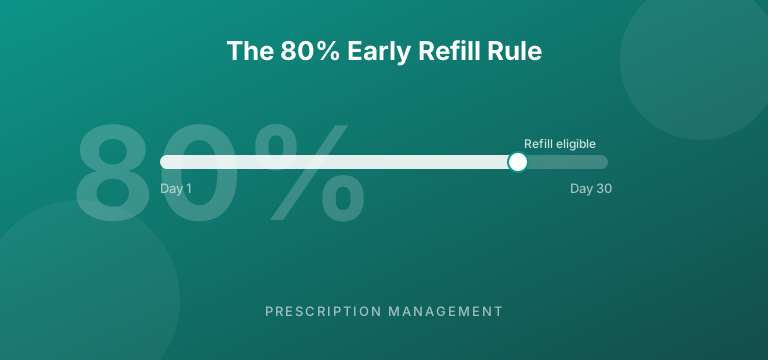
The 80% Early Refill Rule Explained
When insurance allows early fills and when it doesn't.
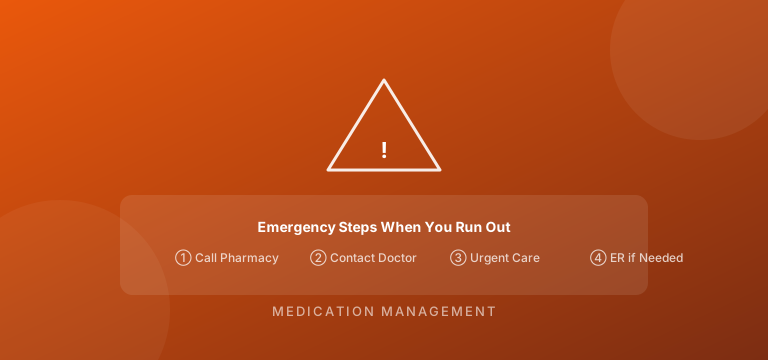
Ran Out of Medication? Here's What to Do
Immediate steps, who to call first, and how to prevent it.
Refill Denied "Too Soon"?
Why it happens and the fix for each cause.
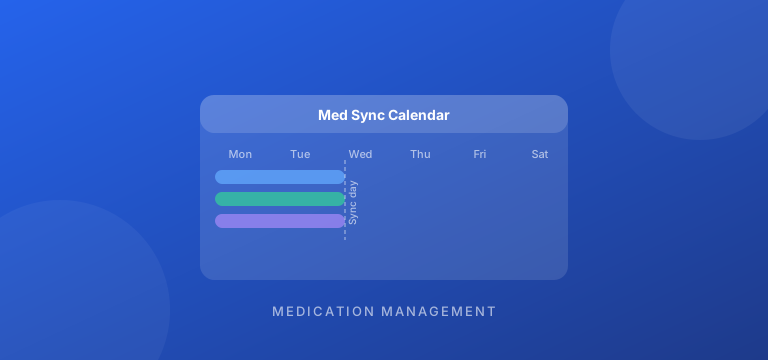
Sync Multiple Refills to One Date
How med sync works and how to ask for it.
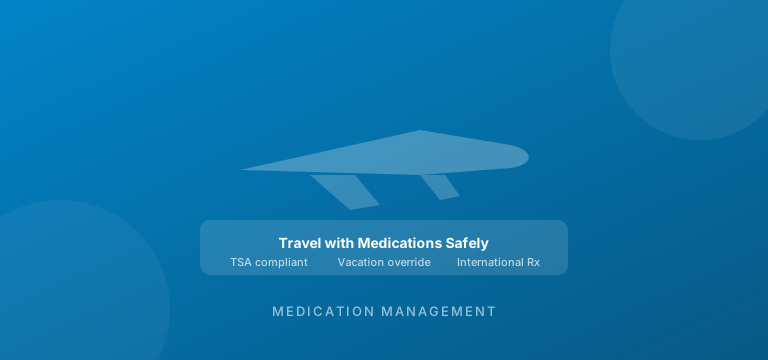
Traveling With Prescriptions
TSA rules, travel overrides, and vacation fills.
Frequently asked questions
Straight answers about days supply, early fills, insurance windows, and more.
Days supply is how long your dispensed quantity should last at your prescribed dose. Insurance uses it to decide when a refill is covered. See our full breakdown in [How Days Supply Is Calculated](/blog/how-days-supply-is-calculated).
Most insurers cover refills once you have used about 80% of the current supply. For a 30-day prescription that is around day 24. We cover the exact mechanics in [The 80% Early Refill Rule Explained](/blog/early-refill-rules-80-percent).
Usually yes, once you cross the 80% threshold. Travel, dose changes, and pharmacy stock-outs can also trigger an override. If your refill was rejected, see [Refill Denied Too Soon](/blog/prescription-refill-too-soon-denied).
You will need a new prescription from your prescriber before the pharmacy can dispense more. Most clinics process refill requests in 1 to 2 business days. Avoid gaps with the steps in [What to Do When You Run Out of Medication](/blog/what-to-do-when-you-run-out-of-medication).
Divide quantity dispensed by daily consumption (doses per day times tablets per dose). For 90 tablets at 2 doses of 1 tablet daily, that is 45 days. The calculator above handles fractional doses and tapers automatically.
Schedule II drugs cannot be refilled at all. A new prescription is required each fill. Schedules III to V can be refilled up to 5 times within 6 months under federal DEA rules; some states are stricter.
The annual cost above shows the base pharmacy price only, not your copay or coinsurance. Tiered formularies typically run $5 to $10 for generics, $25 to $50 for brand names, and higher for specialty drugs. Check your plan formulary for your actual out-of-pocket cost.
A dose increase shortens your effective days supply, which means you reach the refill window sooner. If your insurance still has the old dose on file you may hit a denial. Re-run the calculator with the new dose to see your adjusted refill date.
Yes, transfers usually take 1 to 2 hours and remaining refills move with you in most cases. The new pharmacy initiates the request; you only need the old pharmacy name and Rx number. Step-by-step details are in our [Prescription Transfer Guide](/blog/prescription-transfer-guide).
Request refills 1 to 2 weeks before you leave so processing delays do not catch you short. Many insurers allow a vacation override for early fills tied to a trip. See [Traveling With Prescriptions](/blog/prescription-refill-travel-tips) for TSA rules and chain-pharmacy tips.
Know your exact refill date
in 30 seconds flat
Enter your fill date, tablet count, and daily dose, get your refill date, days remaining, and early-fill window instantly. Free forever, no account needed.
- No signup required
- 100% free forever
- Private & secure