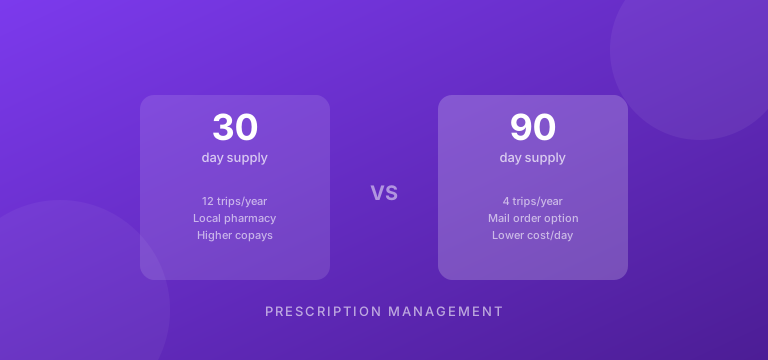
Quick Answer
A 90-day supply saves trips and often costs less, but it's not right for every medication. Here's how to decide which fill length makes sense for you.
The choice between a 30-day and 90-day prescription fill affects your pharmacy trips, your out-of-pocket costs, and how much flexibility you have when your dose changes. Most patients default to whatever their doctor originally wrote, but understanding the tradeoffs lets you make a smarter choice.
The Core Difference
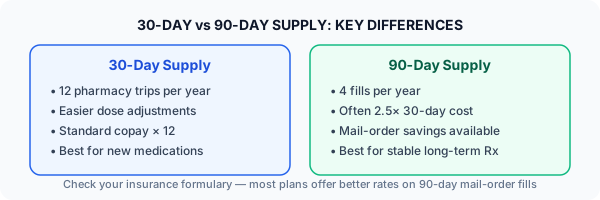
A 30-day fill means your pharmacy dispenses enough medication for one month at a time. You refill it roughly 12 times per year. A 90-day fill triples that supply, you pick it up (or it arrives by mail) about 4 times per year.
The formula is the same either way: days supply equals total quantity divided by your daily consumption. What changes is the quantity your pharmacy dispenses per fill.
Use our prescription days supply calculator to see exactly how a change in quantity affects your refill schedule.
When a 90-Day Supply Makes Sense
You're on a stable long-term medication. If you've been taking the same dose of lisinopril, metformin, or levothyroxine for 6+ months without changes, a 90-day supply is almost always the better choice. Stable regimen + predictable supply = minimal waste and fewer trips.
You want to save money. Most commercial insurance plans charge 2x to 2.5x the 30-day copay for a 90-day supply, meaning you effectively get the third month at a significantly reduced cost. For a $15 monthly copay, a 90-day fill might cost $30-$37.50 instead of $45. On brand-name or specialty drugs, the savings can be $100+ per year.
You use mail-order pharmacy. Mail-order programs almost always require 90-day quantities, and they frequently offer additional savings over retail. If your insurance has a preferred mail-order pharmacy, the 90-day route usually costs less than three 30-day fills at a retail location.
You travel frequently. A 90-day supply keeps you covered for longer trips without requiring mid-trip refills or emergency supply requests.
When a 30-Day Supply Makes More Sense
Your dose is being adjusted. If your doctor is titrating your medication: common with antidepressants, thyroid medications, blood pressure drugs, and diabetes medications: a 30-day supply is safer. A dose change with 60 tablets left in a 90-day supply means wasted medication and potential confusion about which tablets to take.
It's a new prescription. Starting a new medication? Fill 30 days first. You need to know if it works and if you tolerate it before committing to a 90-day supply. Side effects that emerge in the first two weeks could mean a switch in the first month.
It's a controlled substance. Schedule II drugs (Adderall, opioids) legally cannot be dispensed in more than a 30-day supply in most states, regardless of what a doctor writes.
Your insurance coverage is uncertain. If you're between insurance plans, approaching a deductible reset, or concerned about coverage changes, 30-day fills limit your financial exposure.
The Mail-Order Pharmacy Option
Most major insurance plans have a mail-order pharmacy partner. Common ones include CVS Caremark, Express Scripts (Cigna), OptumRx (United Healthcare), and Prime Therapeutics.
For stable medications taken long-term, mail-order typically beats retail pricing by 15-30%. You order online or by phone, and the 90-day supply arrives by mail within 7-10 days. The tradeoff: you need to plan ahead, and last-minute refills aren't an option when a shipment is in transit.
If your insurer mandates mail-order after a certain number of retail 30-day fills of the same medication, you'll get a letter: don't ignore it, as continuing retail fills after a mail-order mandate can result in higher out-of-pocket costs or coverage denial.
How to Switch Between 30-Day and 90-Day Fills
The process is simpler than most patients expect:
1. Call your insurance: Confirm that a 90-day supply is covered for your specific medication and confirm the in-network pharmacy options (retail vs mail-order).
2. Contact your prescriber: Ask them to write a new prescription for a 90-day supply. Many will send it directly to your mail-order pharmacy. You may also be able to convert an existing prescription at the pharmacy counter for non-controlled medications.
3. Time your switch carefully: Don't switch mid-supply if you can avoid it. Wait until you're close to a refill, then switch to 90-day at that refill.
Calculating Your Refill Dates Either Way
Whether you're on 30-day or 90-day fills, the prescription refill calculator computes your exact refill date, early eligibility window, and annual fill count. Plug in your fill date and quantity; it handles the rest based on the standard pharmacy days supply formula.
For 90-day fills, pay particular attention to the early eligibility date (day 72 for a standard 90-day supply). Mail-order programs often recommend initiating the refill order by day 65-70 to ensure delivery before your current supply runs out.