Quick Answer
Managing 3+ prescriptions with different refill dates means constant pharmacy trips. Here's how to synchronize them, and why most pharmacies will help you do it.
Managing multiple medications with staggered refill dates is one of the most common frustrations for patients on long-term therapy. One medication runs out in week two, another in week three, a third at the end of the month. The result: 8-12 pharmacy trips per year, each requiring you to track a different countdown.
Medication synchronization (med sync) solves this. It's a formal pharmacy service that aligns all your maintenance prescriptions to a single refill date. Here's how it works and how to set it up.
What Is Medication Synchronization?
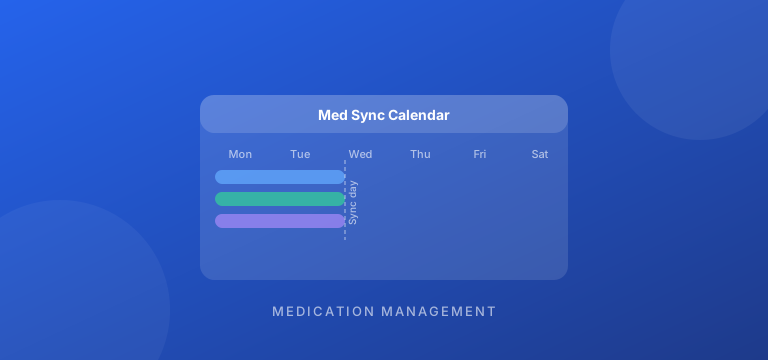
Med sync is a service where your pharmacy adjusts the quantities and refill cycles of your medications so they all come due on the same date each month, or every 90 days if you're on mail order.
On your sync date, you pick up everything in one trip. Between sync dates, you shouldn't need to go to the pharmacy at all for maintenance medications.
Knowing where each medication currently falls in its supply cycle is the starting point. That information lets the pharmacy decide which prescriptions need to be shortened or extended to land on a single sync date.
How Pharmacies Execute the Sync
When you enroll in a med sync program, here's what typically happens:
Step 1. Inventory: The pharmacy lists all your active maintenance prescriptions and their current refill dates.
Step 2. Choose a sync date: You pick a target date. Usually the last week of the month or a specific date that works for your schedule.
Step 3. Adjustment fills: For medications that don't align with the target date, the pharmacy dispenses a short fill (5-20 days) to bridge to the sync date. These are covered by insurance as partial fills in most states.
Step 4. Ongoing maintenance: Once synced, all prescriptions refill on the same date each cycle. The pharmacy typically calls or sends a reminder 5-7 days before your sync date to confirm.
Which Pharmacies Offer This?
Most major retail chains offer med sync programs under various names:
- CVS: ReadyFill
- Walgreens: Prescription Sync
- Rite Aid: Rx Sync
- Walmart Pharmacy: prescription synchronization program
- Independent pharmacies: Many offer it; ask directly
Medicare Part D plans are required to offer medication synchronization as a standard benefit under CMS guidelines. If your insurer hasn't mentioned it, call member services and ask.
Insurance and the Short-Fill Problem
The main insurance friction with med sync is the bridge fills. The short dispensing periods used to get each medication onto the sync date. Insurance systems track days supply and may flag a fill as "too early" if it comes before the expected refill date.
Most pharmacies that offer med sync have a process for working around this:
- Billing the short fill as a partial fill rather than a standard refill
- Getting a one-time override code from the insurance plan
- Coordinating directly with the plan's pharmacy benefit manager
If the pharmacy hits a wall with your insurance, ask them to call the PBM (pharmacy benefit manager) directly. Med sync is increasingly recognized by payers as a beneficial service, and approvals are typically granted.
Calculating the Right Starting Point
To set up med sync effectively, you need to know exactly when each of your prescriptions is due. This is where tracking becomes essential.
For each medication, you'll need:
- The fill date (when you last picked it up)
- The days supply dispensed
- The standard refill date
Run those numbers for each medication, either by hand or by entering them into the days supply calculator. Once you have all the refill dates, you can see how many "bridge days" each prescription needs to reach your chosen sync date.
For example, if your target sync date is the 25th of each month:
- Medication A: refill due on the 18th → needs 7 extra days in the current cycle
- Medication B: refill due on the 3rd → needs 22 extra days in the current cycle
Your pharmacy handles these extensions, but knowing the numbers helps you have a productive conversation.
The 90-Day Sync Option
If you're on mail order, the equivalent is syncing all your 90-day supplies to ship simultaneously. This requires some coordination:
1. All prescriptions need to be authorized for 90-day fills
2. Your mail-order pharmacy needs to process them as a batch
3. Reorder dates should be consistent. Typically around day 65-70 for all medications simultaneously
Some mail-order programs offer automatic ship enrollment where refills process automatically based on your days supply. Check whether your insurer's mail-order pharmacy offers this, and confirm that each medication has auto-refill enabled.
What to Do If a Medication Changes Dose Mid-Sync
Dose changes disrupt sync. When your prescriber changes a dose mid-cycle:
1. Fill the new prescription immediately as a partial supply to cover you until your next sync date
2. Ask the pharmacy to update the sync schedule to reflect the new dose's days supply
3. Confirm the next sync fill will be the correct quantity for the new dose
This happens most commonly with blood pressure, thyroid, and diabetes medications. It's a minor inconvenience, but not a reason to abandon med sync. Most pharmacies handle it routinely.
The Result: Dramatically Simpler Medication Management
Patients who switch to med sync typically report reducing pharmacy trips from 10-12 per year (for 3-4 medications) to 12-16 total, one trip for all medications monthly instead of separate trips for each. For patients on 5+ medications, the difference can be 20+ fewer pharmacy visits annually.
Combine med sync with a prescription refill tracker to stay ahead of your sync date and set reminders 7-10 days before your pickup day.