How to Track Multiple Prescriptions Without Missing a Refill
Managing 4+ prescriptions is hard. This practical system — built around synchronized fill dates, digital reminders, and the early refill window — keeps every medication on schedule.
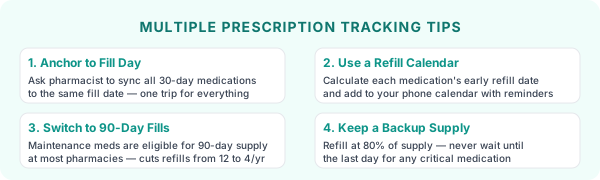
> **Quick Answer:** The most reliable system for tracking multiple prescriptions: anchor all 30-day medications to a single fill date (pharmacy can do this), switch stable medications to 90-day fills, and set calendar reminders for the early refill date — not the last day of supply.
Managing two prescriptions is straightforward. Managing five or six is a part-time job — with refill dates scattered across the month, multiple pharmacy locations, and varying days supply lengths creating a calendar puzzle that doesn't have an obvious solution.
This guide is for patients on multiple maintenance medications, and for caregivers managing medications for a family member with several chronic conditions.
Why Multiple Medications Create Problems
The core issue is fragmentation. When medications are filled on different days throughout the month — lisinopril on the 3rd, metformin on the 12th, atorvastatin on the 19th, levothyroxine on the 27th — each refill requires a separate pharmacy trip, a separate interaction with insurance, and a separate opportunity for something to go wrong.
When one of those refills is rejected (refill too soon, prior auth required, quantity limit) it's easy to lose track while managing the others. Before you know it, you've missed a refill and you're out of a medication you take daily.
The solution is consolidation and systematization — reduce the number of events and make each one predictable.
Step 1: Calculate Each Medication's Current Refill Date
Before you can organize anything, you need to know where each medication stands. For every prescription, gather:
- The fill date (on the bottle label)
- Total quantity dispensed
- Doses per day
- Tablets per dose
Then use the [prescription refill calculator](/prescription-refill-calculator) for each medication. Record the results in a simple table:
| Medication | Fill Date | Days Supply | Next Refill | Early Refill |
|------------|-----------|-------------|-------------|--------------|
| Lisinopril 10 mg | Apr 1 | 30 days | May 1 | Apr 25 |
| Metformin 500 mg | Mar 22 | 90 days | Jun 20 | Jun 14 |
| Atorvastatin 20 mg | Apr 3 | 30 days | May 3 | Apr 27 |
Create this table in your phone's notes app, a spreadsheet, or a printed sheet you keep with your medications. The format doesn't matter — the important thing is having all the information in one place.
Step 2: Consolidate Fill Dates (Medication Synchronization)
Medication synchronization — also called "med sync" or "synchronized dispensing" — means getting all your monthly refills to fall on the same day. Most pharmacies offer this as a free service.
**How it works:**
1. Tell your pharmacist you want to synchronize your medications.
2. They'll review all your prescriptions and pick a target fill day (usually the same day each month — many people choose a fixed day like the 15th).
3. For each medication, the pharmacy does a short fill (a few extra days or a partial fill) on the next cycle to bring it in line with the target date.
4. Starting the following month, everything fills together.
The result: one pharmacy trip per month instead of four or five scattered trips. One conversation with your pharmacist who can review all your medications together and spot interaction concerns.
[Understanding how early refill dates work](/blog/early-refill-rules) is useful here — the pharmacy will set your sync date within the coverage window for all your medications.
Step 3: Switch Stable Medications to 90-Day Fills
Once your monthly medications are synchronized, consider which ones qualify for 90-day fills. Any maintenance medication you've been on for 3+ months at a stable dose is a candidate.
Switching to 90 days cuts your refill events from 12 per year to 4. Even if your insurance has a slightly higher 90-day copay, the reduction in friction is usually worth it. [The detailed cost comparison](/blog/90-day-supply-benefits) shows the math.
If some medications must stay at 30-day fills — controlled substances, newer medications still being evaluated — keep those synchronized while moving everything eligible to 90-day.
Step 4: Set Up Calendar Reminders
This is the step most people skip, and it's the most important one for actually preventing missed refills.
For each medication, create a calendar event on the **early refill date** (not the last day of supply). Set the reminder to trigger 7 days before — so you actually see it with time to act.
**Good reminder structure:**
- Event: "Refill Metformin 500 mg"
- Date: June 14 (early refill date)
- Reminder: June 7 (7 days before)
- Notes: CVS Pharmacy, Qty 180 tabs, 90-day supply, confirm refills remaining
With synchronized monthly medications, you may only need 1-2 calendar events per month. With a mix of 30-day and 90-day fills, you'll have a few more. Either way, it's far fewer than trying to remember every refill intuitively.
Step 5: Track Remaining Refills
The most common way patients run out of refills unexpectedly is not counting them down as they go.
Every time you pick up a refill, update your tracking table. Note the remaining refill count (it's on your pharmacy receipt or in the pharmacy's app). When a medication drops to 2 remaining refills, that's your signal to mention it at your next prescriber appointment.
Don't wait until 0. A prescriber on vacation, a prior authorization request, or a formulary change can add days or weeks to the time it takes to get a new prescription. Two refills means you have 60-90 days of buffer. Use it.
Special Considerations for Caregivers
Managing medications for a spouse, parent, or child with multiple chronic conditions adds another layer of complexity — especially if you're not present for every pharmacy interaction.
**Designate yourself as an authorized agent at the pharmacy.** Most pharmacies allow you to be added to a patient's account as an authorized representative. This lets you pick up prescriptions, ask about refill status, and request refills on their behalf.
**Use pharmacy apps.** Major chain pharmacies (CVS, Walgreens, Rite Aid) have apps that let you manage multiple family members' prescriptions, receive refill alerts, and track all their medications in one view. Set up notifications for refill reminders.
**Create a shared document.** If multiple family members are helping manage someone's medications, a shared note or document prevents duplication (two people filling the same prescription) and gaps (everyone assuming someone else handled it).
When the System Breaks Down
Even a well-organized system gets disrupted by dose changes, insurance changes, travel, and illness. When a variable changes:
- **Dose change:** Recalculate the days supply immediately. A dose increase means fewer days per fill. [Run the new numbers](/prescription-refill-calculator) and update your calendar reminders.
- **New medication added:** Add it to your tracking table, calculate its refill date, and request synchronization with your existing fill day.
- **Insurance changes:** Review all medications on the new formulary. Tier changes can affect cost; step therapy requirements can affect access.
- **Hospitalization:** Hospital pharmacies often dispense a short supply (3-7 days) at discharge. Know what was dispensed and refill promptly once home. Our [guide on running out of refills](/blog/run-out-of-refills) is relevant here.
The common thread: when something changes, update the system immediately rather than relying on memory. Five minutes of updating your tracking table prevents a week of pharmacy phone calls.