Quick Answer
Your prescription label contains 12+ fields that determine when you can refill. Learn what each one means, and which numbers matter most for tracking your supply.
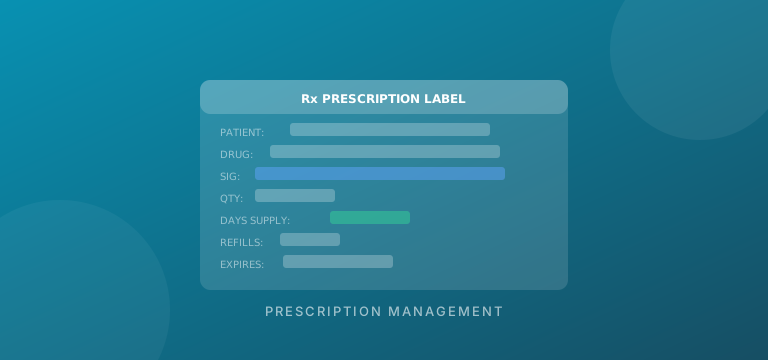
A standard prescription label packs a lot of information into a small space. Most patients read the dosing instructions and ignore everything else, but the other fields determine when you can refill, how much your insurance will cover, and whether there's a data entry error affecting your access to medication.
The Fields That Matter for Refill Timing
Rx Number (Prescription Number)
The unique identifier your pharmacy uses for this specific prescription. You'll need this when calling the pharmacy to request a refill, transfer a prescription, or dispute an insurance claim. It changes every time a new prescription is written, even for the same drug.
Fill Date (Dispensed Date)
The date your pharmacy actually dispensed the medication. This is the start date for all refill calculations, not the date your doctor wrote the prescription, and not the date you picked it up (though usually the same).
Enter this date into our prescription refill calculator as your starting point for calculating when your next refill opens.
Quantity (Qty)
The number of tablets, capsules, or milliliters dispensed in this fill. Combined with your dose, this is what determines your days supply. If this number is wrong, your days supply calculation is wrong, and your refill date will be off.
Days Supply
How long the dispensed quantity should last at the prescribed dose. This is calculated by your pharmacist: Qty ÷ (Doses Per Day × Tablets Per Dose). Your insurance uses this number to determine your refill eligibility date. If there's a discrepancy between the quantity dispensed and the days supply shown, ask the pharmacist about it.
Refills Remaining
How many refills are left on this prescription. A new prescription starts with the number the prescriber authorized. Each time you refill, this count goes down by one. When it hits zero, you need a new prescription, which requires contacting your prescriber.
Sig (Directions)
The dosing instructions transcribed from the doctor's prescription: "Take 1 tablet by mouth twice daily" or "Take 2 capsules with food as directed." Verify that these match what your doctor told you in the office. Transcription errors happen, and incorrect sig instructions lead to incorrect days supply calculations.
Discard After (Expiration)
The date after which the medication should not be used. This is typically 1 year from dispensing for most medications, or earlier for liquids and compounded medications.
The Fields That Affect Your Insurance Coverage
NDC (National Drug Code)
The 11-digit code identifying the specific drug product. Manufacturer, drug, and package size. If your insurance requires a specific manufacturer's product (tier-based formulary) and the pharmacy substitutes a different generic, the NDC will differ. This occasionally causes coverage denials.
DEA Number
Appears on controlled substance prescriptions. It's your prescriber's DEA registration number, required for Schedule II-V drugs. If this field is blank or missing on a controlled substance label, the prescription may not have been valid to fill.
Drug Name and Strength
Always verify this matches what your doctor prescribed. The generic name should appear (e.g., "atorvastatin calcium") along with the brand name in parentheses (Lipitor) and the strength (40mg). If you were prescribed 40mg and see 20mg on the label, don't assume it's a dispensing error, but do confirm with the pharmacist.
Common Label Errors to Watch For
Wrong quantity: If your doctor wrote for 90 tablets but the label says 30, you've been given a partial fill; which might be intentional (insurer required it) or a mistake.
Wrong days supply: The most consequential error. A pharmacist who enters "30 days" when the correct calculation is 45 days means your insurance won't approve a refill until day 30, even though you'll run out on day 45. Calculate it yourself using the days supply calculator and compare.
Wrong sig: If the label says "1 tablet daily" but your doctor told you "1 tablet twice daily," your days supply and refill date are both wrong. This is one of the most common transcription errors in retail pharmacy.
Incorrect refill count: If your label shows 0 refills remaining but you know the prescription should have 5, the pharmacy may have filled it from the wrong prescription record. Check the Rx number against your original prescription paperwork.
Using the Label to Calculate Your Refill Date
With the fill date, quantity, and sig (dose instructions) from your label, you have everything needed to calculate your exact refill date. Enter them into the prescription refill calculator:
1. Fill Date → when your supply period starts
2. Quantity → total tablets dispensed
3. Doses Per Day → from the sig (e.g., "twice daily" = 2)
4. Tablets Per Dose → usually 1, but check the sig
The calculator returns your exact refill date, early eligibility date, and days supply. Making it easy to catch any discrepancies before they turn into a coverage denial.